Long Live Analog

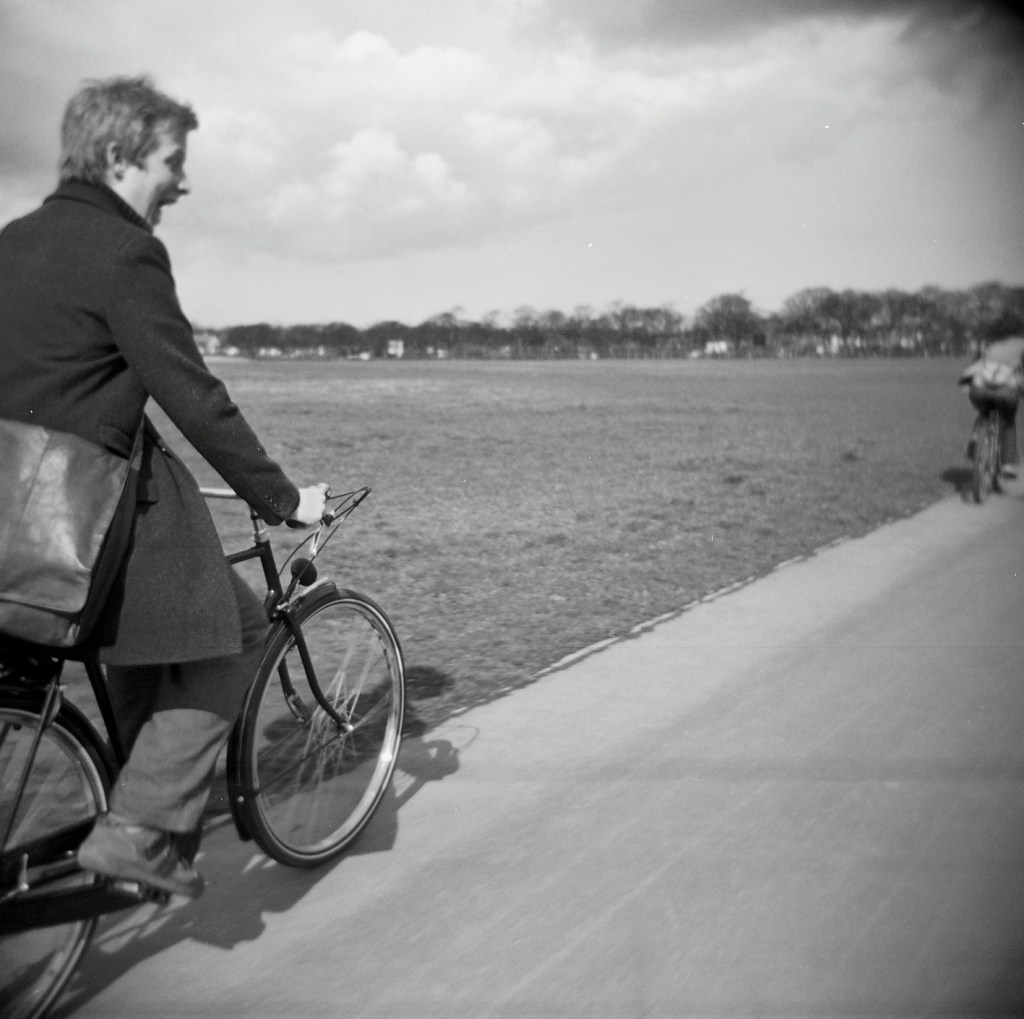
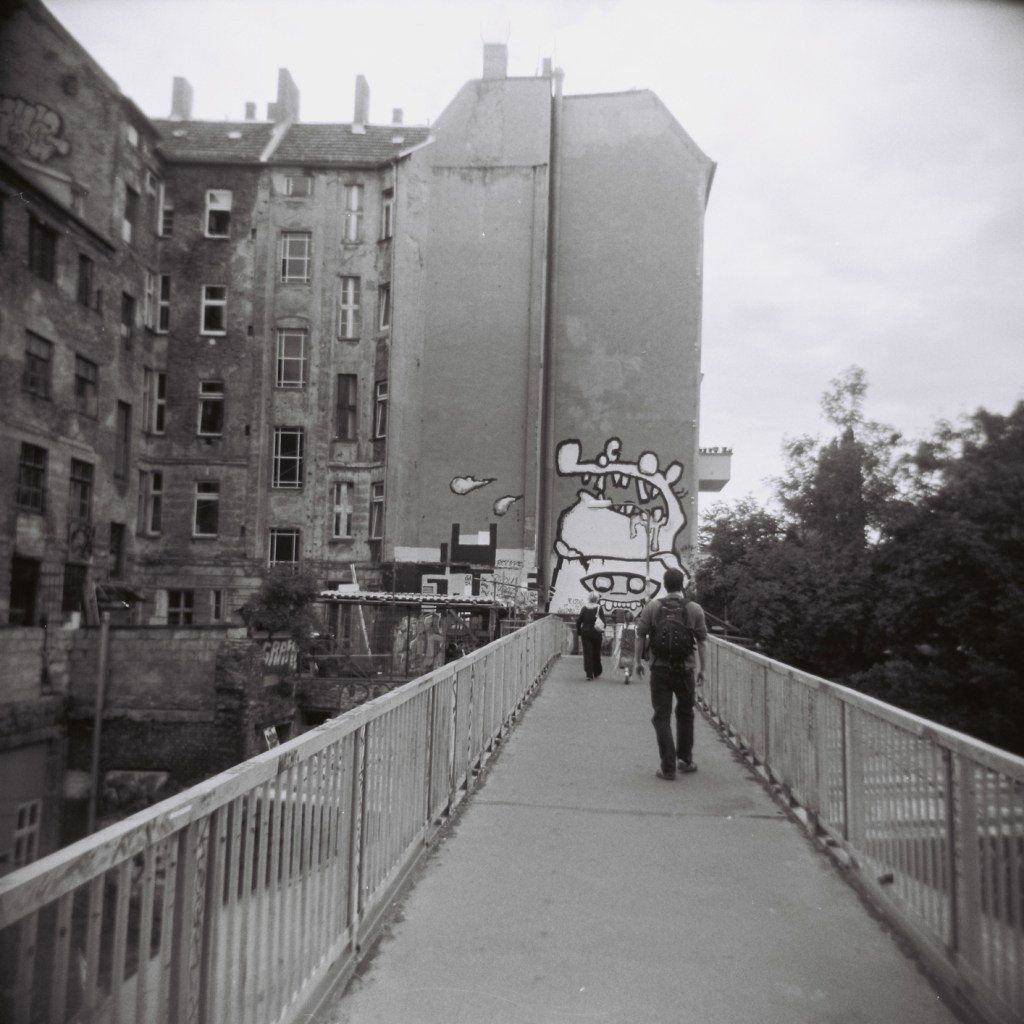
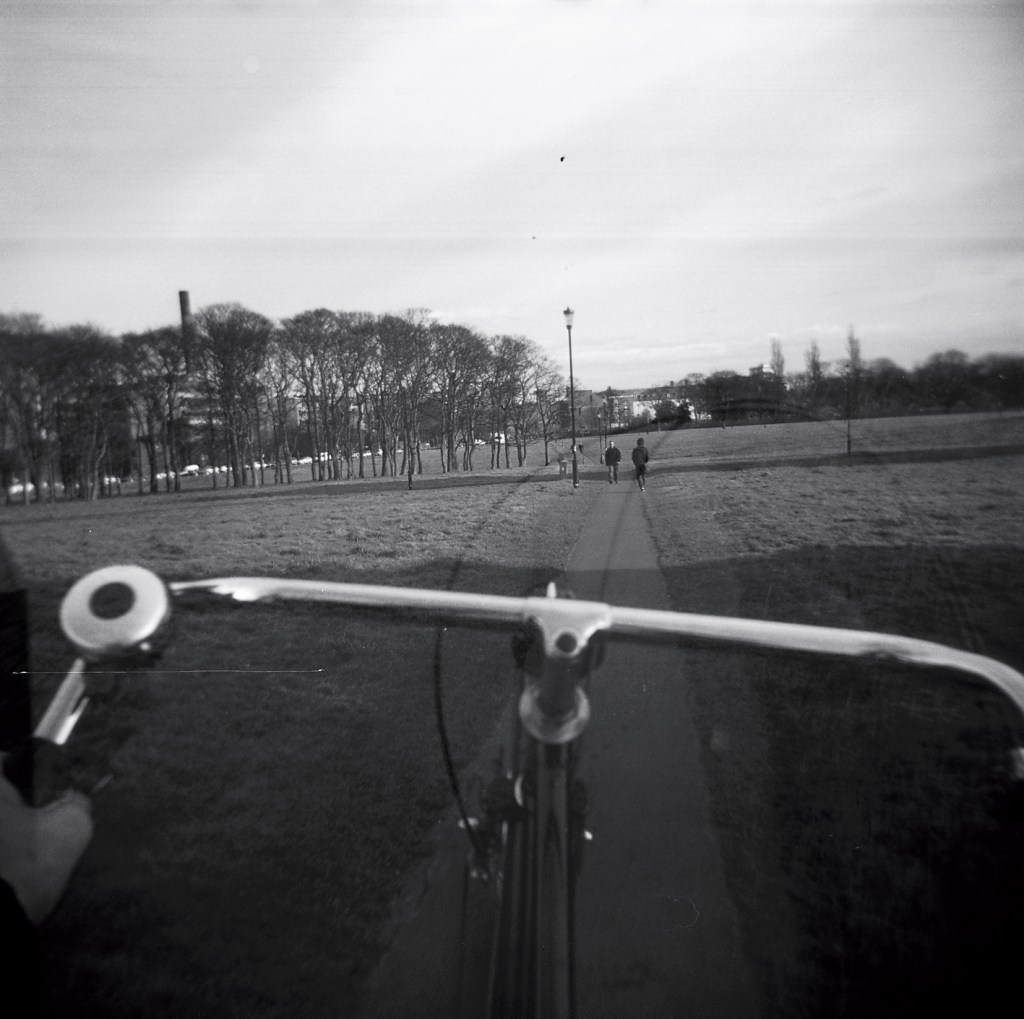
The Holga. Some of my first forays into photography were on medium format film. The camera I used to shoot it was a Holga. For those of you who don’t know, a Holga is an entirely plastic camera (including the lens). Holgas are loved and derided in equal measure for their distortions, vignettes, light leaks, and cult following. These characteristics give Holga photos a rustic charm that was later emulated by Instagram’s square format and early filters – taking the legitimately terrible phone photos of 2010 and adding all sorts of retro filters and vignettes to make them look like they were taken on a lo-fi film camera like the Holga. The photo above is one of my favorites taken with a Holga. It was taken from one moving bicycle, from the hip of my friend Ewan, riding another bicycle, guessing both exposure and focus – not to toot my own horn but just saying… In my alternative, grungy student days it felt good to know I was doing something more authentic and analog, instead of whole heartedly embracing this new platform that would end up changing how millions of people consume and think about imagery.
Limited control. Exposure control on the Holga was limited to the film speed and a switch on the camera where you can select either sunny or shady. Focus was a guessing game – a choice between flower, person, or mountain and then cross your fingers and hope for the best because there was no way to confirm focus through the viewfinder. The film was wound on using a simple knob on top of the camera. Confirmation of having reached the next frame was achieved by peering through a red tinted plastic window in the back of the camera – accidental double exposure and winding too far occurred regularly. It was common to tape this window, and around the seal where the back opened, with black electrical tape so that the user could take some control over the light leaks and thus the usability of the resulting exposures. The fact that the Holga took medium format film, rather than the more ubiquitous 35mm, was a fact that passed me by at first and, despite the camera’s numerous limitations and my inexperience, there was something that kept me coming back to that camera time and time again. It took me a while to realise that, while I took some of my favorite photos with the Holga, it was not the light leaks, distortions, or happy accidents that kept me coming back – it was actually something about the magic that is created in a 6cm by 6cm square frame of medium format film that I found so pleasing.

Medium format: Being presented with a square frame forces you to think about your compositions a little bit differently. And that large negative is, under the right circumstances, able to produce an effect that is at once difficult to put your finger on and very difficult and expensive to reproduce digitally. Medium format offers more depth and, given manual control of the aperture, the ability to separate the subject from the background at greater focusing distances than would be possible with 35mm. It wasn’t long until I was yearning for that same film experience, but with more control over my exposures, focus, and framing. After all, as the price of film steadily increased, I could barely afford the poor hit rate from such a basic camera as the Holga.
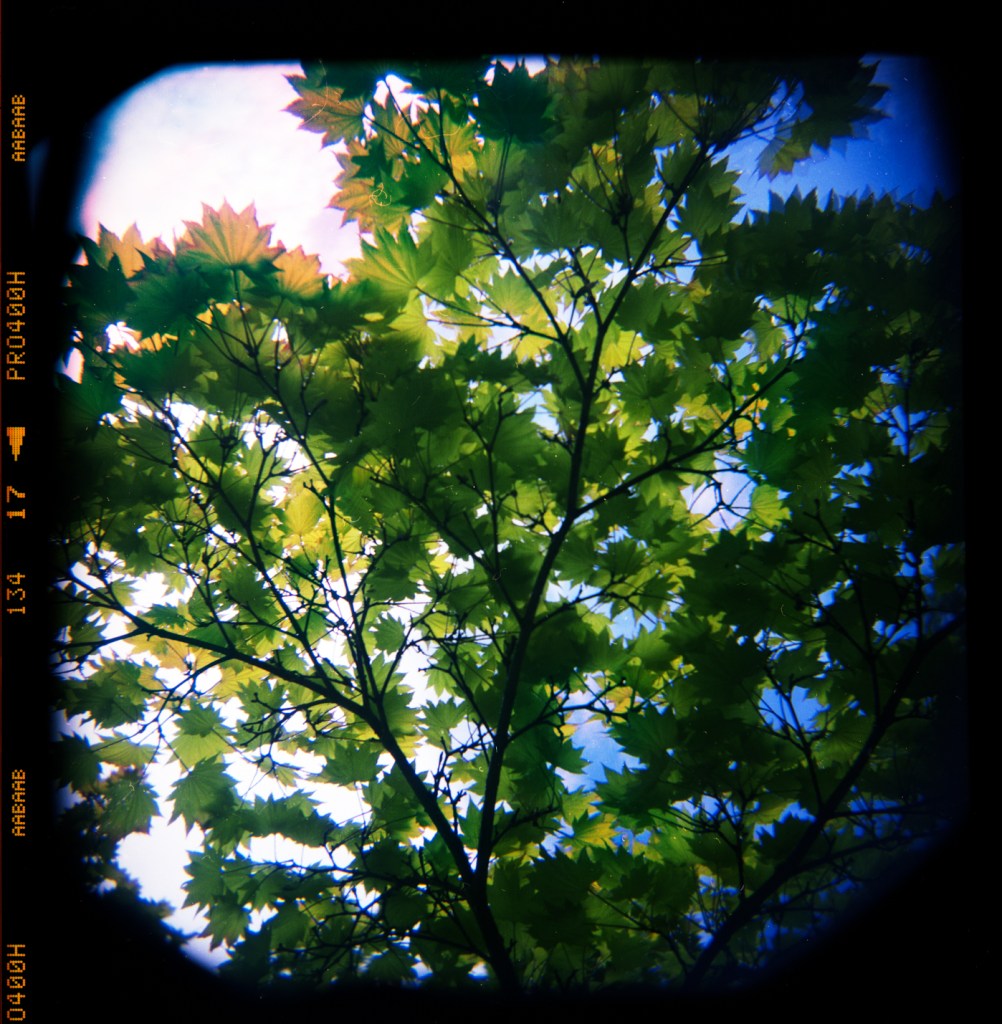
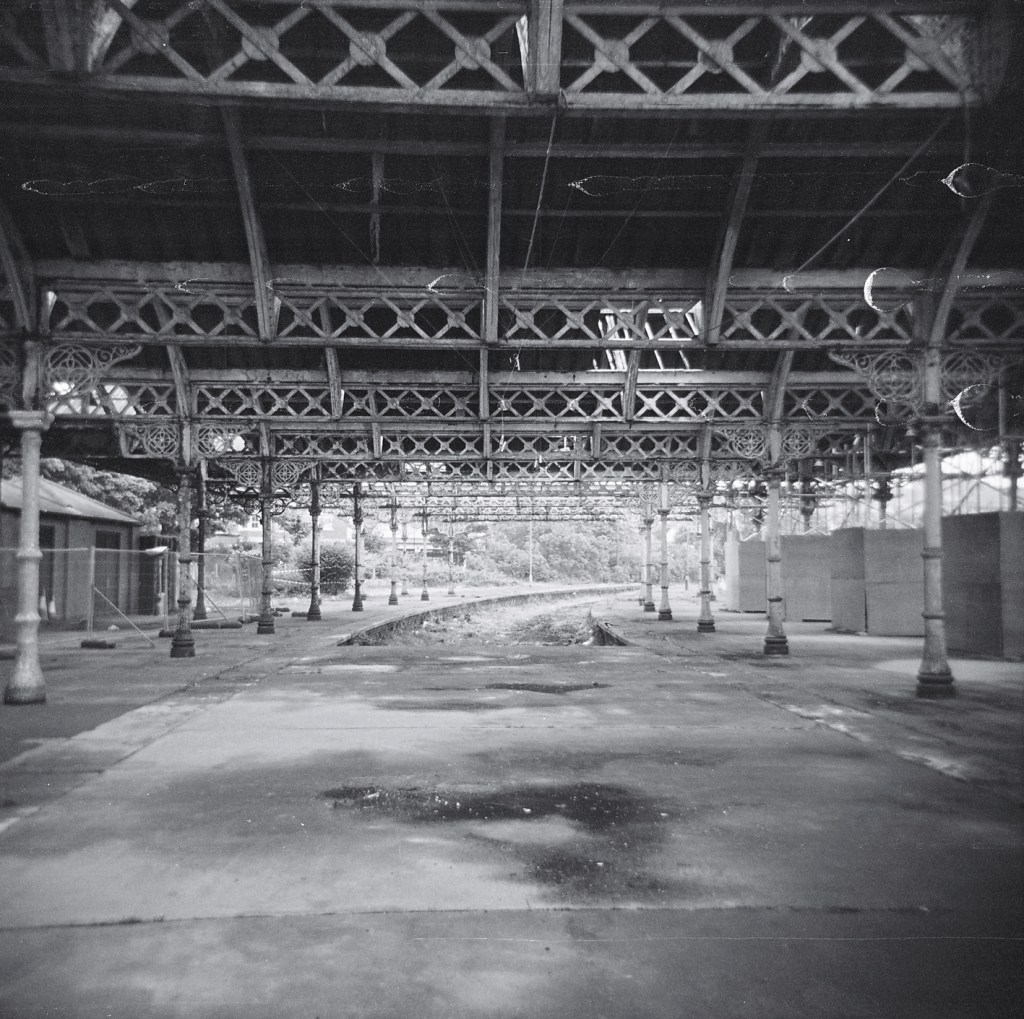
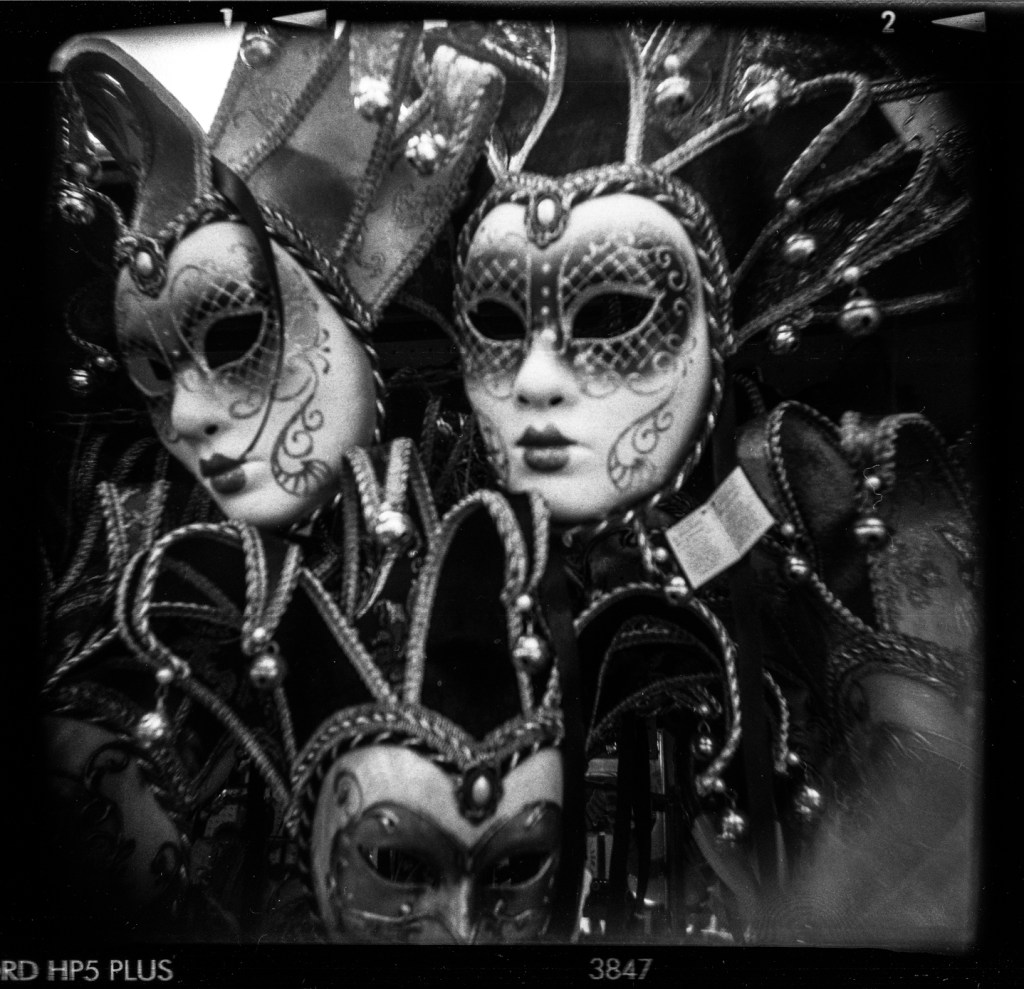
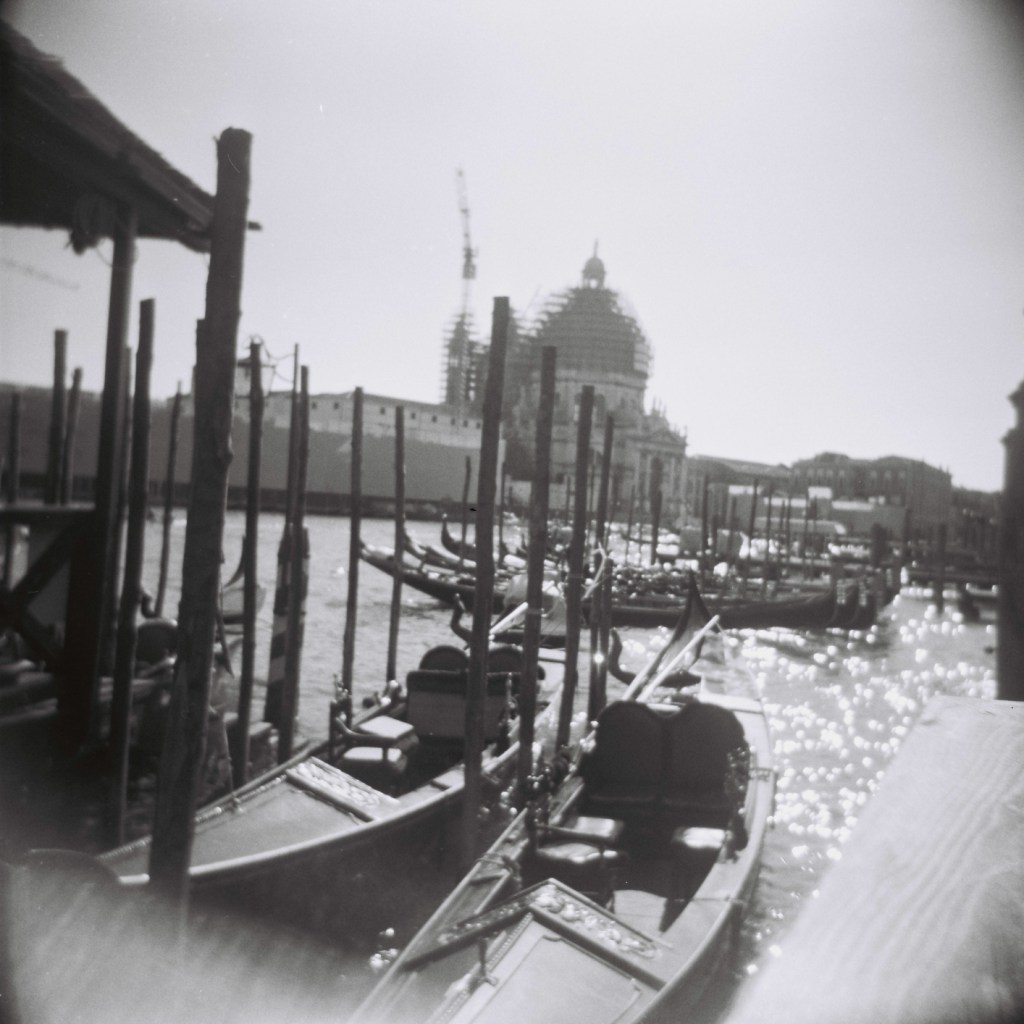
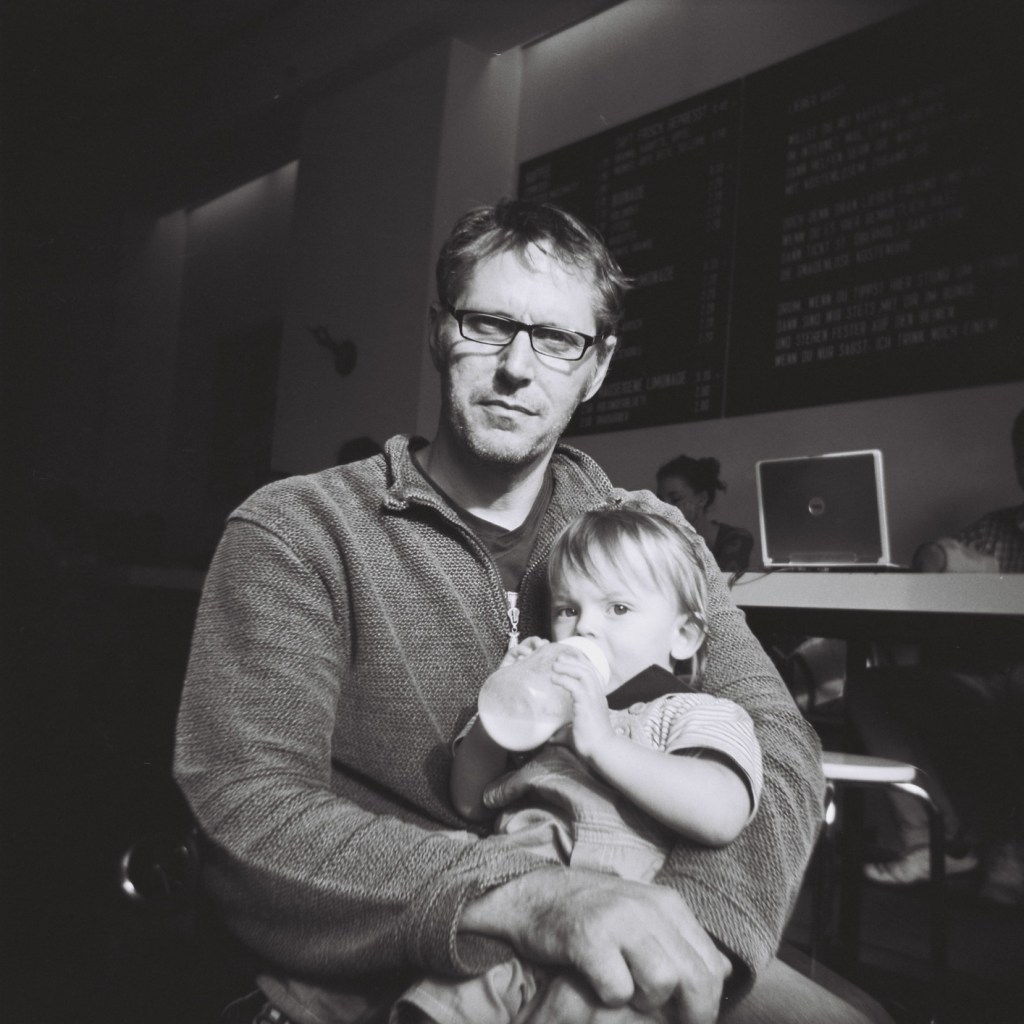
Below are some of my favourite photos taken with the Holga:






The Rolleiflex TLR. As a poor student and wanting to feed my new-found but expensive hobby, I found myself staring up at the shelves of a used camera shop in Manchester. I saw a Rolleiflex TLR for the first time. I was stuck by its beautiful design and, unable to afford one at the time and unable to justify the expense for a long time after, it caught my imagination for fifteen years since. I put analog photography aside for more than a decade as I chased digital photography and wildlife film-making.
Iconic design. The design choice to have the optics for framing and taking pictures in a Twin Lens Reflex camera (TLR) completely separated was once commonplace but, by today’s standards, seems rather esoteric and eccentric. For those unaware, in a TLR, the lens at the top of the camera focuses an image on a ground glass screen, by way of a mirror. This is used to frame and focus the image. Meanwhile the lens at the bottom focuses and exposes the image onto the film behind the shutter. In retrospect, it is easy to see that the writing was on the wall for the TLR design with the advent of the single lens reflex camera, or SLR. SLR cameras allowed the user to frame through the same lens that would also expose the image onto the film, by way of flipping up a mirror at the time of exposure. This not only allows users to compose more precisely, and preview depth of field, but also made the prospect of interchangeable lenses much more affordable. To make a TLR with interchangeable lenses – manufacturers would have to make, then persuade users to buy, and carry around, two lenses for each different focal length- whereas SLR users only had to buy and carry one lens of each focal length. Mamiya did make a TLR that had interchangeable lenses, and Rollei offered two variants of their high-end TLR camera with fixed wide angle and telephoto lenses, respectively, but stopped short of developing an interchangeable lens version. As SLR camera manufacturers started to produce lenses that could focus closer, the TLR design began to look more compromised. The parallax between the two lenses in a TLR are corrected for working distances between infinity and about one meter easily. But the trigonometry involved with correcting that parallax at closer distances, while maintaining the ability to focus to infinity, are mechanically complex and thus more expensive to implement. Despite all these things, the TLR design remains an iconic symbol of photography in general – its two glass eyes arranged one on top of the other, flanked by two smaller circular dials for exposure control.

Workarounds. Rollei tried to remedy the close focus issue in the least expensive way possible with a set of diopters, called Rolleinars. Basically, magnifying filters that attached to the front of each lens, allowing you to focus closer than one meter, but, in doing so, sacrificing the ability to rack to infinity. The Rolleinar for the framing lens had to be accompanied by a “Rolleipar” lens, (incorporated into the framing roleinar attachement in later models) which would further correct the parallax of the framing lens so that what you see in the ground glass is as close as possible to what you eventually get on the taking lens. These clever but inevitably fiddly work-arounds and esoteric workflows (all explained in the wonderfully vintage and kitsch “The Practical Accessories” manual) are among the reasons that drove working professionals and hobbyists to the rapidly evolving SLR systems and, by the ’80s, manufacturers had moved almost completely away from the increasingly obsolete TLR design. By the time I was born, the Rolleiflex TLR had had its heyday and already fallen out of use. By the time I put my Holga down for the last time and started dreaming of owning a Rolleiflex, people were saying that film was dead.

Embracing the vintage. Yet, despite all these inherent flaws, inconveniences, and like many items once relegated to the dusty shelves of collectors and museums by the seemingly unstoppable tide of innovation and economics; these old things are gaining new life, or, perhaps never totally went away – not least because the old Rolleiflex cameras were built like tanks! What’s more, is that film is having a resurgence. Analog street photography is on the rise, and Fujifilm is making film again. Further, many street photographers praise the fact that there is no huge mirror slapping up and down inside a TLR, making it much more of a low-key street camera than its outward looks would otherwise suggest. It could also be assumed that, in 2024, many people you pass on the street may not even recognise a TLR as a camera at all.
Fifteen years after first learning about the Rolleiflex TLR and fifteen years since I last shot film regularly I was finally able to get hold of one. What sets the Rolleiflex apart from most of the other things I own is the care and craftsmanship with which it is made. Despite my camera being made in the ’70s, the optics on this camera are capable of great detail and contrast too. Of course, the Rolleiflex TLR is one of the iconic cameras to shoot in a 6×6 aspect ratio that I loved about my Holga, and it gives me the control over my exposure and focus- all things that the Holga lacked. But, in also accepting the compromises and flaws of the Rolleiflex, I have kept some of that ineffable charm that comes with shooting film on certain cameras.

Like the millennials and gen Zs choosing vinyl, over the CDs of their parents, the iTunes playlists of their youth, and the Spotify playlists of their teenage years; perhaps, or perhaps not for the zenith of quality (although the quality of medium format matched with the zeiss planar of the Rolleiflex lens can be astounding) but maybe just for the love of analog. There is a joy to be had from using something that was made to last, is maintainable, doesn’t require a wifi signal or a screen, and the fact that you can’t buy one on Amazon. Using a Rolleiflex TLR is slow, fiddly, and it doesn’t have all the bells and whistles that my digital gear does but the Rolleiflex delivers something the other stuff can’t – a kind of joy in just using the thing. The image, projected onto a large ground glass, the dials, built to last a lifetime, and the winding mechanism – one time around to advance the film and half way back to cock the shutter.

All these combine to give a manual, analog experience and a photo-chemical process that leads to a negative you can touch. Scans or prints that bear the signs of existing in the physical world – scratches, dust, and hairs. Those who enjoy pulling an espresso with a lever instead of a pump, drive a manual transmission instead of an auto, split firewood with a maul, or grind their coffee beans by hand – not because it’s better, but for the satisfaction share the sort of feeling that comes with shooting film in the digital age. I would be lying if I said that I didn’t get joy from bringing back beautiful digital photos too, timelapses, and video. I also enjoy being in beautiful places to capture those things. But, for me, the Roleiflex stands alone as the camera that is simply a joy to use, despite its shortcomings, and almost separate from the stunning photographs it can produce which can feel like magic in their own right.
 mrlowndes
Leave a comment